



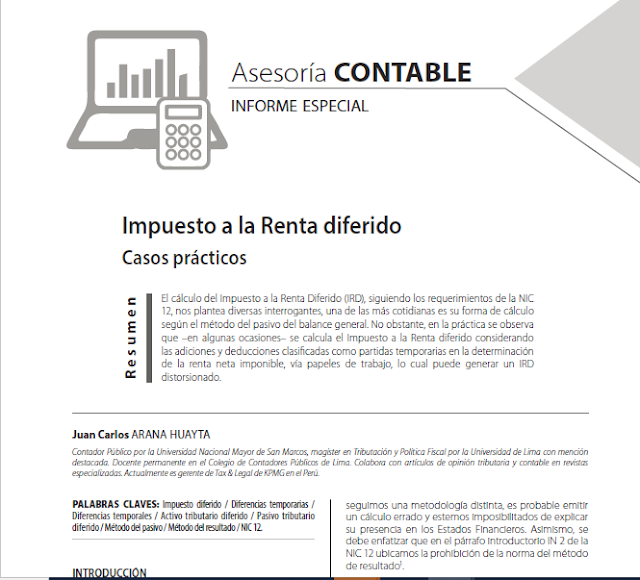
Introduction to IAS 12 Cases
The application of IAS 12: Income Taxes requires identifying temporary differences between the carrying amount of assets and liabilities in the statement of financial position and their tax base. Below, we present practical scenarios to illustrate the recognition of deferred taxes.
Practical Case 1: Deductible Temporary Difference (Deferred Tax Asset)
When an expense is recognized for accounting purposes in the current period but is only tax-deductible in a future period, a Deferred Tax Asset (DTA) arises.
- Scenario: Provisions for doubtful accounts that do not yet meet the specific tax requirements for deduction.
- Accounting Impact: An expense is recorded, reducing the accounting profit.
- Tax Impact: The tax authority does not recognize the expense yet, resulting in a higher current tax base.
Practical Case 2: Taxable Temporary Difference (Deferred Tax Liability)
A Deferred Tax Liability (DTL) occurs when an income is tax-deferred or an expense is accelerated for tax purposes compared to its accounting treatment.
- Scenario: Accelerated depreciation of fixed assets permitted by tax laws (such as DL 1488).
- Accounting Impact: Lower depreciation expense recorded in books.
- Tax Impact: Higher depreciation deduction in the tax return, leading to a lower current tax payment but a future obligation.
Conclusion
The correct identification of these differences ensures that the financial statements reflect the future tax consequences of current operations, providing a fair view of the entity’s financial position.