



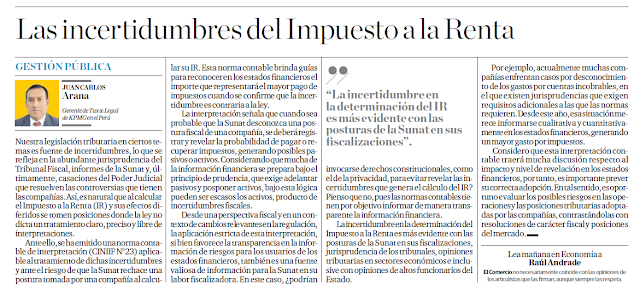
This post refers to the importance of IFRIC 23, an interpretation of IAS 12 that clarifies how situations where there is uncertainty over the tax treatment that the tax authority (such as SUNAT in Peru) will accept should be reflected in the accounting records.
Context of the Standard
IFRIC 23 was issued to provide clear guidance on how to measure and recognize income tax liabilities or assets when there are doubts about the interpretation of tax law. It is not a change in tax law, but rather an accounting rule on how to report tax risk.
Key Points for Companies
- Probability Assessment: The company must determine whether it is probable that the tax authority will accept the uncertain tax treatment.
- Assumption of Examination: It must be assumed that the tax authority will examine the amounts and will have full knowledge of all relevant information.
- Risk Measurement: If it is not probable that the company’s criteria will be accepted, the impact must be measured using the “most likely amount” or the “expected value” (weighted average).
- Impact on Results: Any change in the assessment of uncertainty must be reflected in the financial statements of the current period.
This standard forces management to be much more transparent with their auditors and shareholders regarding tax contingencies that might previously have been left off the balance sheet.
Originally published by Juan Carlos Arana Huayta on TaxControl. Reference of publication in El Comercio on 07/26/2019.